
If you live in Neenah, Appleton, or anywhere in the Fox Valley, you already know the winter routine: heavy snow, a quick warm-up, then another deep freeze. It looks pretty, like the laminated back of a Christmas card on your fridge… a beautiful snowy roof right up until you spot giant icicles hanging from the gutters and brown stains creeping across your ceilings.
That combination usually points to the same culprit: ice dams. And when it comes to ice dams on your Wisconsin roof, the problem is less about one bad storm and more about how your roof, attic, and insulation are working together.
This guide breaks down what ice dams are, why they love Wisconsin roofs, and what you can do, both this week and over the next few years, to stop leaks before they start.
What Is an Ice Dam (and Why Is Wisconsin So Prone to Them)?
An ice dam is a ridge of ice that forms along the eaves of your roof. Snow on the warmer upper roof melts, runs down, and then refreezes at the cold edges and gutters. Over time, that ice ridge becomes a little frozen wall, trapping more meltwater behind it.
Once water is trapped, it has only two options:
- Refreeze and grow the dam, or
- Work its way under the shingles and into your house
That’s when you start seeing roof leaks from ice dams in Fox Valley homes. Cue the: stains on ceilings, peeling paint, wet attic insulation, even buckled hardwood floors. Cue the desperate googling and sighs and defeated hope that it doesn’t cost too much to fix.
Ice dams are especially common on Wisconsin roofs because we get exactly the conditions they love:
- Significant snow cover
- Temperatures that bounce above and below freezing
- Older homes with patchy insulation and ventilation
So if you’re searching “winter roof problems Wisconsin” every January, you’re not alone.
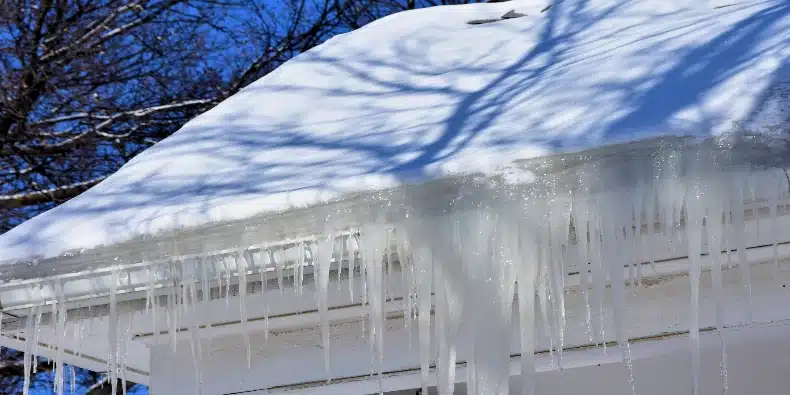
How Ice Dams Form: The Short Version
Most ice dams on a roof in Wisconsin come down to one thing: uneven roof temperatures. Here’s the basic chain reaction:
- Warm air leaks from your home into the attic through light fixtures, plumbing penetrations, and gaps in insulation.
- That warm air heats the underside of the roof deck.
- Snow on the warmed part of the roof melts.
- Meltwater runs down to the colder eaves and refreezes.
- As more snow melts and refreezes, a ridge of ice builds up.
- Water pools behind the ice and eventually backs up under shingles and into the house.
Older Fox Valley homes with partial insulation, limited soffit vents, and a few recessed lights punched into the ceiling are prime candidates.
What Ice Dams Do to Your Roof and Home
Left alone, ice dams can cause a surprising amount of damage:
- Shingle damage – Ice lifts shingles, cracks them, and exposes the underlayment.
- Leaks and stains – Water sneaks into the attic, then shows up as stains on ceilings and walls.
- Wet, ruined insulation – Once insulation gets soaked, it loses most of its R-value and can feed mold growth.
- Rot and structural problems – Long-term moisture can weaken roof decking, rafters, and wall framing.
- Gutter damage – The weight of the ice can twist or tear gutters right off the fascia.
That’s why good ice dam prevention in Neenah, Appleton, and the wider Fox Valley is all about treating both the symptoms and the cause.
Short-Term Fixes: What to Do When You Already Have Ice Buildup
If you’re staring at heavy icicles and thick ice bands right now, think “damage control first, and then upgrades second.”
1. Avoid using a roof rake
A roof rake might seem like a simple way to remove snow from the edge of the roof, but we generally do not recommend using one, since it can damage the integrity of the shingles if used improperly. On steep, icy, or already vulnerable roofs, trying to remove snow yourself can create more problems than it solves.
Instead:
- Stay off the roof and avoid working from unstable ladders
- Do not scrape, jab, or drag tools across the shingles
- Have a qualified roofing professional assess the buildup and recommend the safest next step
2. Clear and protect gutters
Clogged gutters trap meltwater and encourage more ice buildup. Many winter roofing guides now treat gutter cleaning as step one in ice dam prevention and recommend adding heat cables in known trouble spots.
3. Create temporary melt channels
Some homeowners use “ice melt socks” (nylon stockings filled with calcium chloride) laid perpendicular to the dam to carve small channels. These can help water drain, but they’re a band-aid, not a cure.
Avoid:
- Rock salt (it can stain and damage roofing and landscaping)
- Chipping ice with a shovel or axe (easy way to destroy shingles)
4. When to call a pro
For thick, stubborn ice or active leaks, professional steam-based ice dam removal is often safer and cheaper than a DIY slip, fall, or roof tear-up. Many Wisconsin roofing and restoration companies now offer this as a dedicated winter service.
Long-Term Ice Dam Prevention for Fox Valley Homes
The real solution to ice dams roof Wisconsin is making your roof colder and more even from eave to ridge. That means dialing in your insulation, ventilation, and roofing system—all things Rosenow Customs already focuses on in its snow-ready roofing approach.
1. Beef up attic insulation (and keep it dry)
Most Wisconsin building and energy resources recommend R-49 to R-60 attic insulation for our climate zone.
Key moves:
- Add blown-in cellulose or fiberglass to reach that R-value.
- Replace or dry out any insulation that’s been soaked from past leaks.
- Air-seal around recessed lights, plumbing stacks, chimneys, and attic hatches so warm air can’t bypass the insulation.
By reducing heat escaping into the attic, you keep the roof deck closer to outside temperature. That’s exactly what you want for ice dam prevention.
2. Fix attic ventilation (soffit + ridge working together)
Ventilation keeps your roof surface temperature more consistent and reduces moisture buildup in the attic. The Wisconsin Historical Society recommends about 1 square foot of net free ventilation for every 150 square feet of attic floor area, split between soffit (intake) and ridge (exhaust) vents.
In practical terms:
- Clear blocked soffit vents (often buried in insulation)
- Add continuous soffit vents if you only have a few small round ones.
- Install or extend ridge vents along the roof peak
3. Upgrade underlayment and edge details
When it’s time for a new roof, details at the eaves matter as much as the shingles themselves.
On snow-ready installs in Neenah, standard practice now includes:
- Ice & water shield at least 6 feet up from the eaves (often more over heated spaces)
- Extra underlayment in valleys and around chimneys
- Extended drip edge and metal flashing to protect the edge where ice piles up
Rosenow’s snow-ready roofing guide specifically highlights enhanced ice and water shields, extended eave protection, and beefed-up flashing as key differences from “standard” installations.
4. Choose roof materials that play nice with snow
Asphalt shingles are still the go-to choice for most Fox Valley roof replacements thanks to cost and versatility, and they handle winters well when installed correctly.
For even better snow performance, many Wisconsin homeowners now consider:
- Stone-coated or standing seam metal roofing – sheds snow more easily and reduces long-term snow load.
- Higher-profile architectural shingles with quality underlayment.
- Snow guards on metal roofs to prevent dangerous “roof avalanches.”
Rosenow Customs installs asphalt, DECRA stone-coated metal, and Tesla Solar Roofing, so they can tailor materials to how your specific roof handles winter.
5. Keep gutters and drainage in shape
Gutters don’t cause ice dams by themselves, but clogged or undersized gutters absolutely make them worse.
Best practices from winter roofing and real-estate guides include:
- Clean gutters and downspouts before winter so meltwater can escape.
- Make sure downspouts discharge away from the foundation.
- Consider larger K-style gutters or additional downspouts on long runs.
- Add heat cables only in chronic problem areas as a supplement, not a substitute, for insulation and ventilation.
Why Fox Valley Roofs Need a Winter Plan
Homes in Neenah, Appleton, Oshkosh, and the rest of Northeast Wisconsin see the full winter roller coaster—lake-effect moisture, subzero cold, and those frustrating melt-and-freeze cycles. And it only seems to be getting worse as the years go by. Old man winter comes and then forty degree weather follows. Roofs cry, literally.
Everyone at Rosenow Customs lives here. We know how winter performance, snow load, and ice dam prevention are not hypothetical issues here.
If you’re noticing:
- Big, thick icicles along the eaves
- Cold spots or drafts near exterior walls and ceilings
- Water stains after a thaw
- Ice ridges only over certain rooms
…there’s a good chance your home has a mix of insulation gaps, ventilation issues, and aging roofing details working together to create ice dams.
When to Call in a Fox Valley Roofing Pro
Some problems you can tackle yourself. Others are better handled by a crew that works on Wisconsin roofs all winter long.
Rosenow Customs is based in Neenah and serves homeowners across the Fox Valley with:
- Roof inspections focused on winter and ice dam risk
- Roof replacement and upgrades with enhanced ice & water shield coverage
- Snow-ready and metal roofing options for long-term durability
Stop Ice Dams Before They Start
If you’ve been searching for “ice dam prevention,” or just “why is my ceiling leaking in February,” you’re exactly who this guide is for.
A quick recap:
- Short term: safely remove excess snow, protect gutters, and don’t attack the ice with shovels or salt.
- Long term: upgrade attic insulation, fix ventilation, improve underlayment and eave details, and choose materials designed for Wisconsin winters.
When you’re ready to get ahead of the next storm, schedule a winter roof inspection with Rosenow Customs. One visit now can mean no buckets on the floor the next time the Fox Valley thaws.
Call (833) 766-7663 to line up a visit anywhere in the Fox Valley or Northeast Wisconsin.
Rosenow knows:
Local, no-nonsense roofs, windows & one-day baths – without the franchise price or high selling pressure.


